
Packing lunch is one of those things that starts with good intentions and ends with a sad desk sandwich — unless you have a way to bring a hot, real meal with you. That’s where portable lunch warmers, often called lunch crocks, change everything. These compact, slow-heat containers let you pack last night’s leftovers, soups, or freshly assembled meals, plug them in at your desk or in your car, and eat something that’s genuinely hot and satisfying at lunchtime. No microwave required, no excuses needed.
The key to making these work isn’t the container itself — it’s what you put in it. The best lunch crock meals are dishes that hold up well over a few hours of gentle heat and taste even better once they’ve had time to meld. Think soups, stews, rice dishes, pasta with sauce, oatmeal, or yesterday’s casserole. If it reheats well in a slow cooker, it thrives in a portable lunch warmer. Here’s how to get the most out of this format.
Why the Portable Lunch Warmer Format Works
- Hot food without a microwave: For office spaces without microwaves, shared kitchens, classrooms, or job sites, a portable lunch warmer is the only way to eat something genuinely hot at midday.
- Reduces food waste: It’s one of the best systems for using up leftovers intentionally. Last night’s soup, stew, or casserole becomes tomorrow’s hot lunch with zero additional cooking.
- Better than fast food: Having a hot, home-cooked meal at lunch consistently saves money and keeps you eating better during the week.
- Simple operation: Plug it in when you arrive, eat when you’re ready. The low, steady heat warms food gently without scorching or drying it out.
- Works for meal prep: These are perfect companions for a weekend meal prep session — batch-cook a big pot of soup or stew, portion it into lunch containers, and you’ve got lunches handled for the week.

Best Foods for Portable Lunch Warmers
Soups and stews: These are the ideal lunch crock food. They heat evenly, stay flavorful over gentle heat, and are easy to portion. Chicken noodle, beef stew, chili, lentil soup, tomato soup — anything in this category works beautifully. The liquid content means there’s no risk of drying out over the warming period.
Rice dishes: Fried rice, rice and beans, bibimbap-style rice bowls, or risotto all travel well in a lunch warmer. Add a splash of water or broth when packing to keep the rice from drying out. Grain bowls with farro or quinoa work the same way.
Pasta with sauce: Pasta in a tomato or cream sauce stays great in a portable warmer. The sauce protects the pasta from drying out and the gentle heat keeps everything warm without overcooking the noodles. Pack it slightly undercooked if possible — it’ll finish gently during the warming period.
Casseroles and baked dishes: Portions of chicken and broccoli casserole, mac and cheese, or baked ziti transfer beautifully to a lunch warmer. They warm evenly and taste just as good as they did the night before. Add a small splash of broth or milk to creamier dishes before sealing.
Oatmeal and hot breakfasts: Steel-cut oats or overnight oats can be warmed in a lunch crock for a hot breakfast at your desk. Pack with toppings on the side and stir them in when you’re ready to eat. This works well for early commuters who want something warm but don’t have time to eat before leaving.
Tips for Getting the Most Out of Your Portable Lunch Warmer
- Start with room-temperature or refrigerator-cold food: These warmers are designed to bring food to a safe eating temperature, not cook raw food. Always start with food that’s already cooked — pack it cold and let the warmer do the rest.
- Plug in as soon as you arrive: Most lunch warmers take 2–4 hours to fully heat the contents. Plug in the moment you get to your desk so food is hot by lunchtime.
- Add a splash of liquid to dry dishes: For rice, pasta, or casserole portions, add a tablespoon or two of water, broth, or sauce before sealing. This creates a little steam that keeps the food moist during the warming process.
- Don’t overfill: Leave a small amount of headspace in the container. Overfilling can prevent the lid from sealing properly and may result in uneven heating.
- Use it for meal prep lunches: The best way to use a portable lunch warmer consistently is to pair it with a Sunday meal prep habit. Cook a big batch, portion into containers, refrigerate or freeze, and grab one each morning. For more on building that system, check out How to Meal Prep Like a Pro.

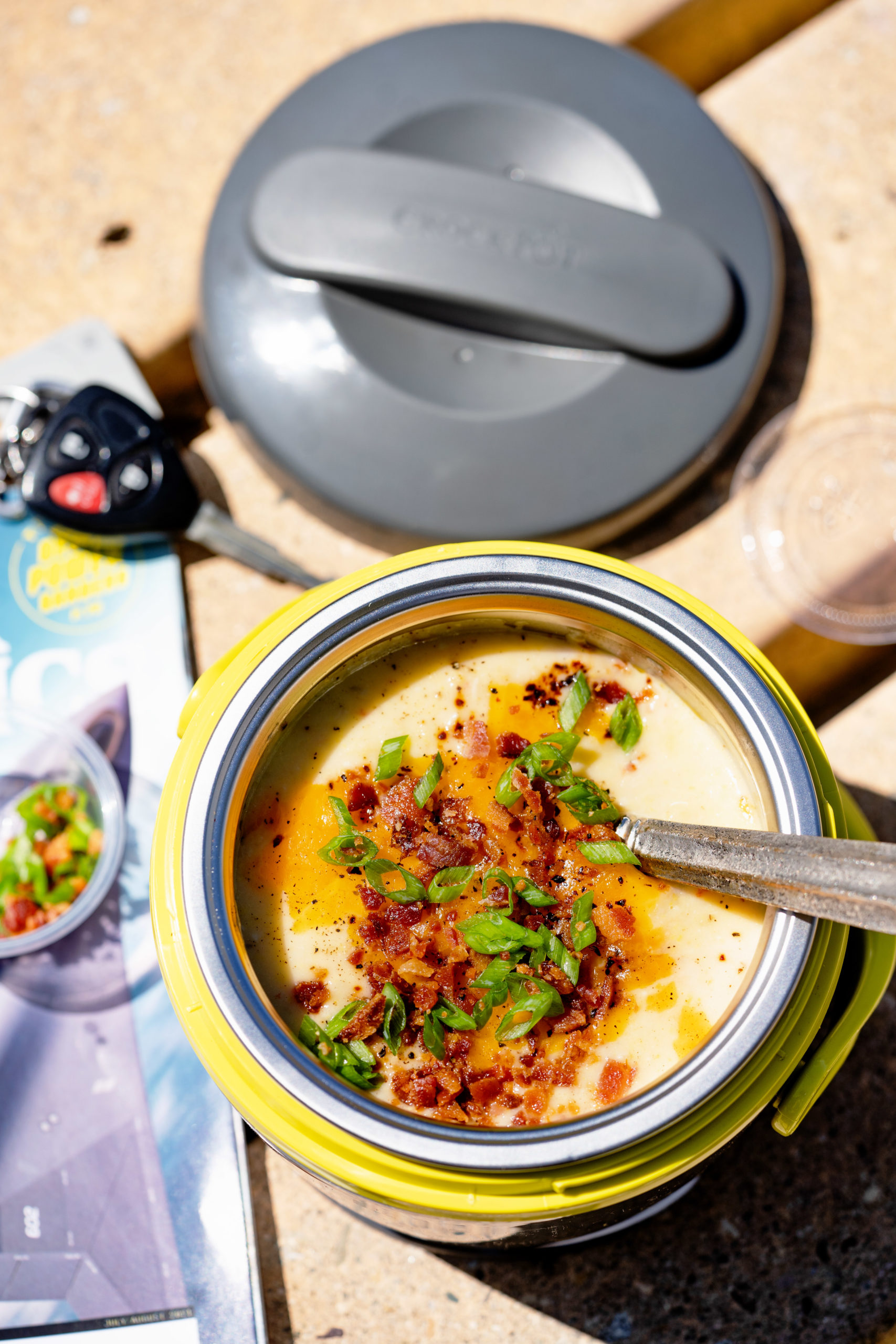
Meal Ideas to Try in Your Lunch Warmer
Classic Chicken Noodle or Veggie Soup: The ultimate portable lunch crock meal. Make a big batch on Sunday, portion into individual servings, and you have five days of hot, homemade soup with zero extra effort during the week. Soups with hearty noodles, beans, or grains are especially satisfying because they’re filling without being heavy.
Leftover Taco Filling: Seasoned ground beef or chicken taco meat, black beans, and rice warm up beautifully together. Pack with toppings — salsa, sour cream, shredded cheese — on the side and assemble a burrito bowl at lunch. It’s a fresh take on leftovers that doesn’t feel like eating leftovers. For inspiration, check out Halloween Taco Spread for a fun taco night that generates great leftover material.
Macaroni and Cheese: Homemade or leftover baked mac and cheese is a top-tier lunch crock food. The gentle heat keeps it creamy without drying it out. Add a splash of milk before packing and it’ll taste like it just came out of the oven.
Holiday Leftovers: Stuffing, mashed potatoes, turkey and gravy, roasted vegetables — all of these transform into an excellent hot lunch in a portable warmer. Instead of eating holiday leftovers cold at the kitchen counter, pack them up and eat them properly. For ideas on using up holiday surplus, Post Holiday Clean-up has a great framework for turning leftovers into new meals.
Food Safety and Storage
Safe food handling: Always pack food that’s already been fully cooked. Portable lunch warmers maintain temperature but do not cook raw food to a safe internal temperature. Make sure food has been stored properly in the refrigerator (below 40°F) before packing it in the morning.

How long food stays safe: Once warmed in the lunch crock, food should be eaten within 2 hours of reaching temperature. Don’t leave food on the warming setting all day — pack it, warm it, eat it at lunchtime, and don’t leave leftovers in the container for an extended period.
Cleaning the container: Most lunch warmer pots and lids are dishwasher-safe (check your specific unit’s instructions). Wash after every use to prevent odor buildup. The base unit should only be wiped down with a damp cloth — never submerge in water.
Serving Suggestions and Meal Pairing
The lunch warmer is most powerful when combined with a consistent meal prep routine. Pair it with fresh sides you’ve packed separately — a small container of cut fruit, a handful of crackers, or a simple side salad — and you have a complete lunch that rivals anything you’d buy. For building out your overall meal prep game, How to Meal Prep Like a Pro walks through how to structure your week so that lunches like this happen automatically rather than as an afterthought. Pair your hot lunch with a refreshing summer drink and fresh-cut sides when the weather is warm, and visit Summer Picnic Tips for inspiration on packing a complete meal away from home.

More Recipes You Might Like
- How to Meal Prep Like a Pro — Part 1 — Build a meal prep system that makes hot lunches effortless every week.
- Summer Picnic Tips — Great ideas for packing and transporting food away from home.
- Post Holiday Clean-up — Turn holiday leftovers into fresh meals instead of letting them go to waste.
- Halloween Taco Spread — A fun taco night that generates the perfect portable lunch leftovers.
Tips for Using Your Lunch Crock Pot
How to Pack It the Night Before
Assemble your lunch crock the night before and store the removable inner container in the fridge. In the morning, just pop it into the heating base and plug it in at your desk. Most lunch crock pots take 1.5-2 hours to heat food to the proper temperature on the standard setting. Pack foods that reheat well — soups, stews, pastas, and casseroles work best.
Best Recipes for a Lunch Crock
Anything with sauce or liquid reheats beautifully in a lunch crock. Try my slow cooker Caribbean beef stew — it reheats like a dream and the flavors are even better the next day. Chili, mac and cheese, pasta with meat sauce, and soups are all ideal. Even leftover creamy chicken tortellini works perfectly.
Cleaning and Maintenance
The inner container is usually dishwasher-safe, but hand-washing with warm soapy water extends its life. Never submerge the heating base in water — just wipe it down with a damp cloth. To prevent stuck-on food, spray the inside with cooking spray before adding your meal, or use a disposable slow cooker liner for zero cleanup.
Frequently Asked Questions
What is the ideal cooking temperature and time for lunch crock recipes in a standard slow cooker?
For most lunch crock recipes like soups, stews, or chilis prepared in a standard slow cooker, cook on low for 6-8 hours or high for 3-4 hours to ensure tenderness without overcooking.Recipes That Crock, Six Sisters Stuff. If your slow cooker runs hot, use low setting with high time estimates to prevent dry or mushy results.Recipes That Crock
Can I cook raw food directly in the lunch crock warmer, or is it only for reheating?
The lunch crock (e.g., Crockpot Lunch Crock) is designed primarily as a food warmer, reaching about 165°F, ideal for reheating pre-cooked meals like soups or chilis over 3-4 hours rather than cooking raw ingredients from scratch.Reddit r/slowcooking, Real Food by Dad. Some users successfully cook simple items like rice with shrimp in 1.5-3 hours if plugged in early, but test at home first to ensure safety and doneness.Reddit r/slowcooking
What are good substitutions for common ingredients in crockpot lunch recipes?
Chicken can be swapped with turkey or pork for heartier lunches, while beans or sweet potatoes substitute for meat in vegetarian versions of chilis and stews.Taste of Home, Real Food Dietitians. Use coconut milk instead of dairy for creamy soups to avoid curdling, and sturdy veggies like carrots or potatoes hold up better than soft ones like zucchini which should be added later.Food & Wine
How should I store and freeze lunch crock leftovers?
Portion leftovers into 16oz deli containers or freezer bags, flatten for quick thawing, and freeze for up to 3 months; thaw overnight in fridge and reheat in the lunch crock.Reddit r/slowcooking. For make-ahead, prepare big batches of chili or soup on weekends, freeze in single servings, and warm directly in the lunch crock for 3-4 hours at work.Real Food by Dad
What are the best make-ahead tips and serving suggestions for lunch crock meals?
Prep ingredients the night before or make large batches on weekends for freezing; layer root veggies and meat at bottom for even cooking, add dairy or fresh herbs at end.Six Sisters Stuff, Food & Wine. Serve chilis or pulled pork over rice, in wraps, or with buns; top with cheese, avocado, or slaw for variety straight from the lunch crock.Taste of Home
Leave a comment
Have a comment or question? Let me know, I'd love to hear from you.
0 comments to " Crockpot™ Lunch Crock "